
Loading...


Explore how digital offers, identity checks and payment tools are changing flight booking and airport journeys.
Booking a flight increasingly involves a chain of digital interactions. Travellers may search on a phone, compare fares online, receive a confirmation by email, check in through an app and use a digital boarding pass at the airport. Behind those familiar steps, airlines, airports and technology providers are working on changes to how travel products and passenger information are managed.
The direction is towards more connected processes, but adoption is uneven. A feature available with one airline or at one airport may not be available on another journey. A digital passport initiative is not the same as a universal replacement for a physical passport, and an automated answer is not a guarantee that the information is correct.
For South African travellers, the most useful question is what each development changes in practice: which choices are easier to compare, what information needs to be shared, and where to turn when the system cannot complete a task.
A flight search can show much more than the departure time and a fare. It can present different baggage allowances, seat choices and conditions for changing a booking. The underlying industry challenge is to present those choices accurately across airlines and booking channels, and then make it possible to manage the selected services after payment.
The International Air Transport Association describes part of this work as a move towards Offers and Orders. In broad terms, an offer describes the travel products available to a customer, while an order represents the selected purchase and associated services. The industry aim is to modernise the processes behind shopping, booking and servicing. The actual customer experience depends on the systems used by each airline and its partners.
In an October 2026 update, IATA said seven airlines were live or implementing Orders and that more than 20 were expected to follow from 2027. These are IATA's reported implementation figures and expectations at that time. They do not mean every airline had completed the transition or that every booking platform offers the same capabilities.
A possible passenger benefit is a clearer view of what has been purchased, including relevant extras. Another is easier servicing when a traveller needs to make a change. Neither result should be assumed merely because a provider uses modern technology. The test is whether the itinerary, total price and applicable rules are accurate, understandable and accessible when the customer needs them.
More digital choice can also make a search harder to interpret. One fare may include checked baggage while another includes cabin baggage only. A seat, meal or change condition may be included in one option and separately priced in another. A useful comparison brings the information together without hiding the underlying differences.
A traveller comparing two domestic flights should check the same date, passenger count and route, then add the services they actually need. For an international itinerary, the number and duration of connections, operating airlines and arrival date deserve attention as well. The final amount before payment is more informative than an earlier headline price, provided the traveller has selected the relevant extras.
A digital interface cannot know every cost of the trip. It may not include transport to the airport or a hotel needed because of a late arrival. Those costs remain part of the traveller's own comparison. Similarly, a fare that permits changes can still involve a fee or fare difference, depending on its conditions.
For South African travellers with flexible dates, online comparison can make it easier to view alternatives. It does not guarantee a lowest price or establish a universal best day to book. Availability and offers can change, so confirm the itinerary and final amount at the point of purchase.
AI tools can help travellers organise broad questions, such as how to compare an itinerary with a connection against a direct flight, or what information to gather for a family trip. They can summarise options and explain unfamiliar terms in plain language. They can also be wrong, rely on outdated information or present an assumption as a confirmed fact.
That limitation is especially important for visas, transit rules, baggage allowances and change conditions. These depend on the traveller, route, airline and current rules. Use an AI-generated answer to identify questions, then verify consequential details through the relevant airline, booking provider or official authority. Do not treat a conversational response as a booking confirmation.
IATA has identified AI assistants and automated agents as a factor in how travel is discovered and compared. Its October update also highlighted the importance of data quality and commercial relationships as the industry adapts. This is an emerging direction, not proof that all travellers are already booking through autonomous systems.
Be careful about the information shared with any digital tool. A travel question rarely requires a public post containing a booking reference, passport number or payment details. Understand the service's privacy practices and use verified channels when you need to access or change an existing reservation.
Identity checks are part of international travel, and some airports and airlines are experimenting with or operating digital identity processes. The broad idea is to allow a traveller to share appropriate credentials electronically and, in some settings, use biometrics to support a check. What is available and accepted depends on the airline, airport, government and specific journey.
IATA's One ID programme describes a consent-based model for sharing required travel credentials and using contactless processes where available. It is an industry initiative, not a statement that every country accepts a digital credential in place of existing documents. Travellers should continue to carry the documents required for their journey and follow official instructions.
In October 2026, IATA announced an early One ID certification involving Air New Zealand and Hong Kong International Airport. That is an example of an identified implementation, not proof that the same process is available at South African airports or on every flight. The announcement also describes plans to expand the approach, which should be distinguished from services already available.
A successful digital process needs more than a quick scan. The traveller should understand what data is collected, why it is needed, how consent operates and what alternatives are available. Privacy protections and accessible support matter alongside speed. Rules and options may differ, so consult the actual provider's information before using a service.
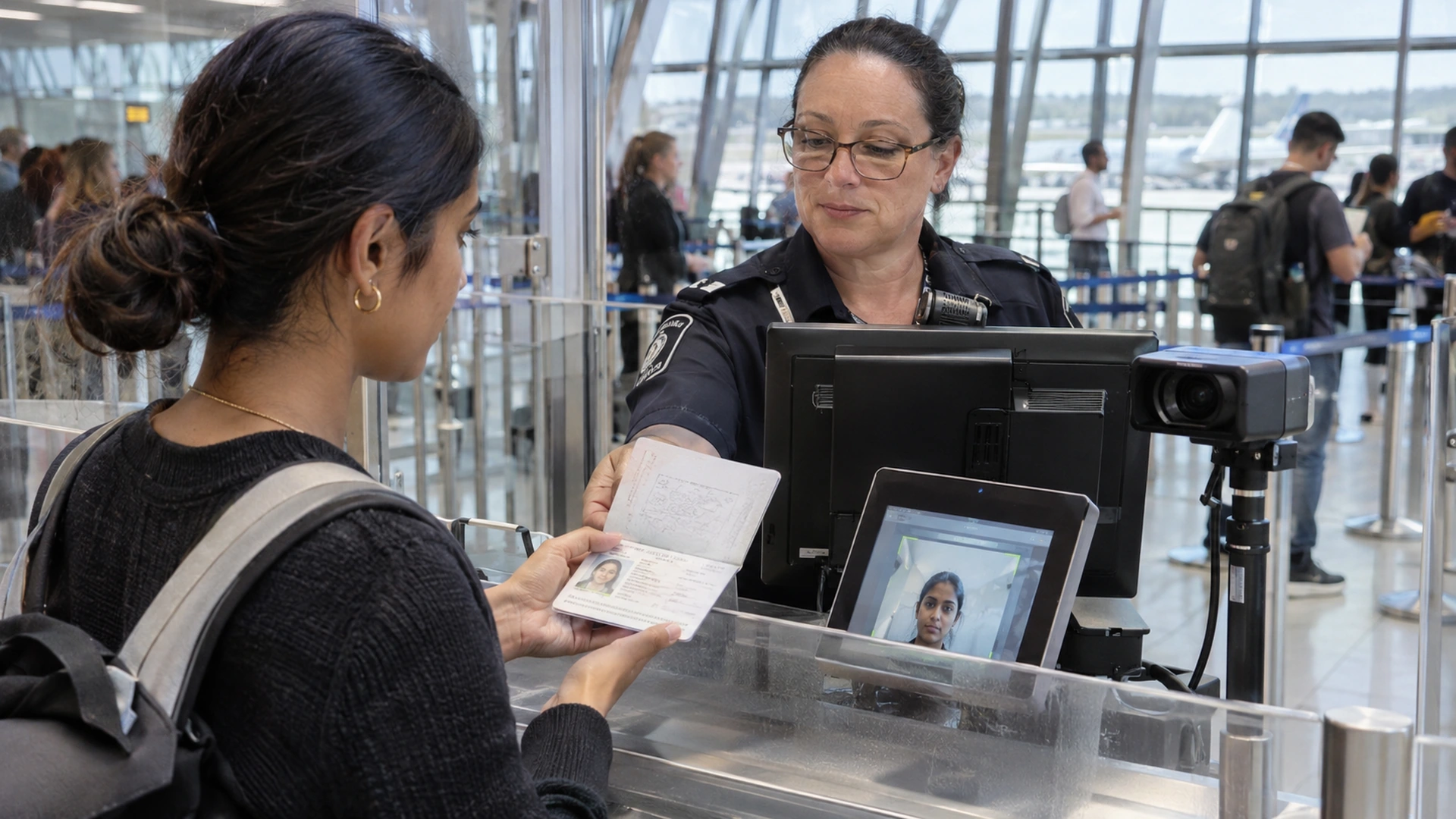
IATA's 2026 Global Passenger Survey announcement reported interest in digital passports and other technology among surveyed travellers. One reported finding was that 82% were interested in sharing a digital passport with an airline at booking after payment if it enabled more personalised services, such as information on visa requirements.
That finding describes responses to a particular question. It should not be interpreted as proof that 82% of all travellers have used a digital passport, that a service is available on every route or that everyone is comfortable sharing biometric information. Interest, actual use and acceptance by governments are different things.
Surveys can help the industry identify areas where people want a smoother experience. They can also reveal barriers, including the complexity of entry requirements. For a traveller planning a specific trip, however, the survey does not replace checking whether the relevant airline and authorities support a feature and what documents are required.
Different passengers will make different choices about data sharing. Some may value a faster process; others may prefer an alternative. Design should accommodate those differences within the rules of the particular journey and provide a clear explanation rather than assuming consent.
Payment is another part of the journey changing through digital tools. Travellers may encounter cards, digital wallets or other methods depending on the provider and market. The available options, currency, fees and confirmation process should be clear before payment.
A completed payment and a confirmed itinerary are related but distinct pieces of information. After booking, check that you receive the provider's confirmation, the passenger names, flight details and booking reference. If the result is unclear, use verified contact information to ask the provider about the status rather than paying again immediately.
Protect the reference and other personal details. A screenshot of a boarding pass or confirmation can contain information that should not be shared publicly. Be alert to unexpected messages asking for extra payment or directing you to an unfamiliar site. Check contact details independently through the relevant organisation's official website.
IATA's discussion of airline payments frames payments as an industry issue involving customer choice as well as cost and operational risk. Its worldwide figures do not establish the fee a particular traveller will pay. Check the final amount and the payment terms offered for your own booking.
Digital tools can make it easier to check in, receive a boarding pass or monitor a change, but the available process varies. Online check-in does not necessarily remove the need to drop a bag, present travel documents or complete security and immigration procedures. Check the operating airline's deadlines and instructions for the specific flight.
A mobile boarding pass is convenient until a phone battery is flat or connectivity is unavailable. Where supported, save the relevant information in a way you can access during the journey and consider an available alternative. Do not assume an app will work at every airport or for every passenger. Contact the airline if document checks or special assistance require a different process.
Baggage tracking and real-time updates can also improve visibility when available. Visibility is not the same as a guarantee that a bag or flight will arrive on time. If baggage is missing or damaged, Airports Company South Africa advises reporting it to the airline before leaving the airport. Keep the baggage tag and follow the airline's process.
A feature described in an international announcement may be limited to a particular carrier, airport or stage of travel. Before relying on it, confirm that it applies to your flight and to every passenger in your party. Ask whether registration is needed, which device or documents are required, and how to proceed if the service is unavailable on the day.
This is especially relevant for an itinerary involving multiple airlines. One carrier's app may display some segments while another organisation manages an additional service or change. Keep the original confirmation and the contact details supplied with it, so that you can find the right assistance without depending on a single screen.
A digital journey is only as useful as the support available when it does not work. A traveller may need help with a name error, an itinerary change, accessibility requirements or a payment that has not produced a clear confirmation. Automated tools can handle routine tasks, but a clear route to appropriate assistance remains valuable.
Service providers also need reliable systems behind the interface. A beautifully designed screen cannot compensate for stale availability or a booking that different parties cannot find. Accurate information, good handovers and clear responsibility are less visible than an app, but they shape the traveller's experience.
For customers, the practical approach is to use digital tools for convenience while checking the details that matter. Compare complete offers, protect personal information, keep your confirmation and consult the airline and authorities for current requirements. Explore flights on Airline Tickets, then judge the available options by the journey they provide, not the technology label attached to them.
Gerald Ferreira
Specializing in the intersection of high-fidelity capture and spatial computing, providing expert analysis on the hardware and software ecosystems defining the metaverse.