


Traveling with an elderly family member can be a rewarding experience, offering a chance to make memories together while exploring new places. However, it requires careful planning to ensure their comfort, safety, and enjoyment. Here’s an informative guide on how to make flying with an elderly family member a smooth and pleasant journey.
Planning Your Trip
Choose the Right DestinationConsider the health, mobility, and interests of your elderly companion when selecting a destination. Places with accessible attractions, good healthcare facilities, and comfortable weather conditions are ideal.
Book in AdvanceReserve flights, accommodations, and tours well in advance. Look for senior-friendly amenities and services, such as wheelchair accessibility, on-site medical services, and leisure activities suited to their pace and interest.
Travel InsurancePurchase comprehensive travel insurance that covers pre-existing conditions, medical emergencies, and trip cancellations. This will provide peace of mind for all types of unforeseen events.
Preparing for the Flight
Medical ClearanceConsult with a healthcare provider to ensure your family member is fit to travel. Discuss medications, mobility issues, and any need for special assistance during the flight.
Seating ArrangementsWhen booking flights, request aisle seats for easier access to the bathroom, or bulkhead seats for more legroom. Early boarding options can also help avoid the rush and make settling in easier.
Packing EssentialsPack medications in carry-on luggage, including a few extra days' supplies in case of delays. Also, include snacks, a water bottle, travel pillows, blankets, and entertainment like books or a tablet.
At the Airport
Early ArrivalArrive at the airport early to navigate check-in, security, and boarding processes without rush. This also allows time to use restroom facilities and purchase any last-minute items.
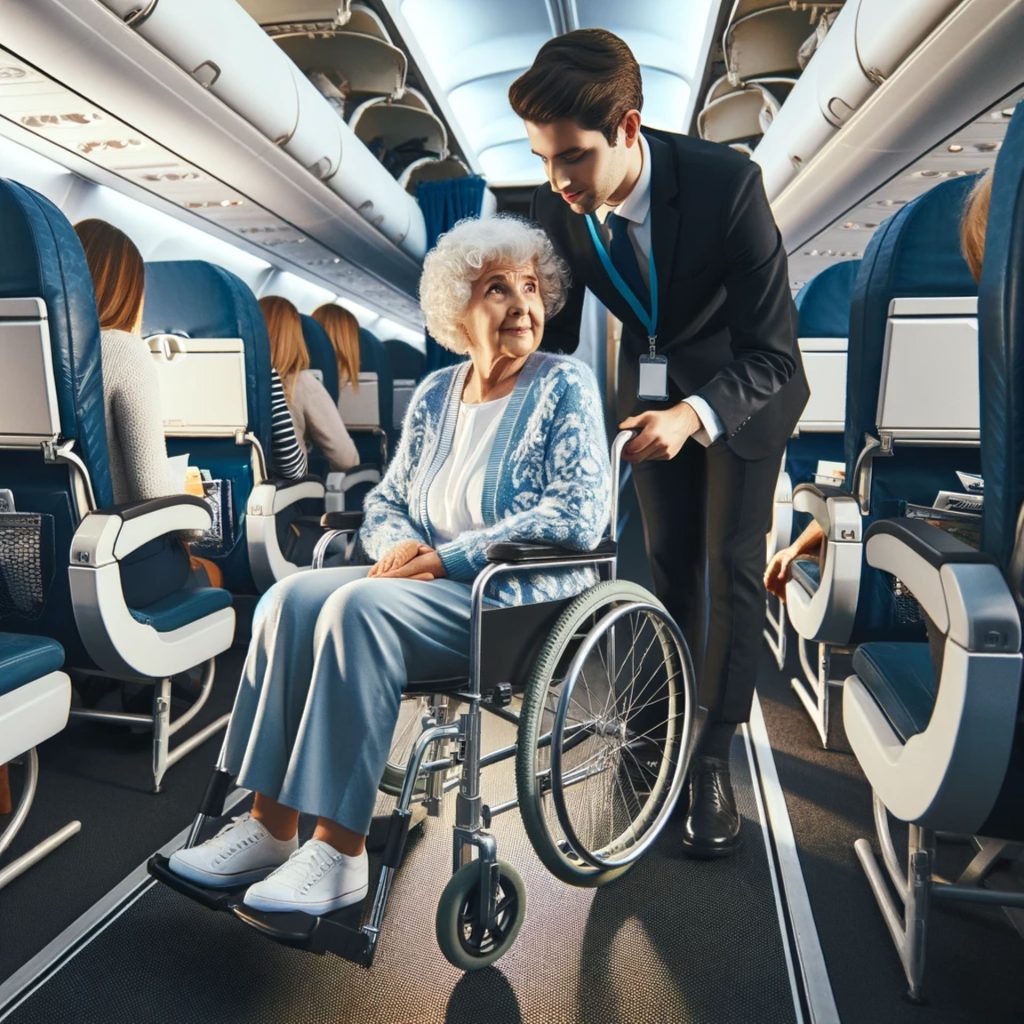
Airport AssistanceMany airports offer assistance services for elderly passengers, including wheelchair service and personal escorts through security and to the gate. Be sure to request these services in advance.
Security ScreeningPrepare for security checks by knowing the regulations, especially regarding medications and medical devices. Inform security personnel about any special considerations, such as pacemakers or mobility aids.

During the Flight
Comfort and HealthEncourage your family member to stay hydrated, stretch, and walk around if possible to reduce the risk of blood clots. Compression socks can also help with circulation.
Communication with Flight CrewLet the flight attendants know if your elderly companion has any special needs or health concerns. They can assist with meals, medication timing, and any in-flight emergencies.

Arriving at Your Destination
Post-Flight RecoveryAllow for rest after the flight to recover from jet lag and fatigue. Plan a relaxed schedule for the first few days to gradually acclimate to the new environment.
Enjoying the TripAdapt your itinerary to suit the energy and health levels of your elderly family member. Include plenty of rest periods, leisurely walks, and cultural activities that are not physically demanding.
Local ResourcesFamiliarize yourself with the location of hospitals, pharmacies, and other essential services near your accommodation. Keep a list of emergency contacts handy, including the local embassy or consulate if traveling abroad.
Traveling with an elderly family member can deepen your bond and create cherished memories. With thoughtful preparation and a patient, flexible approach, you can navigate the challenges of flying and ensure a comfortable and enriching travel experience for the entire family.