

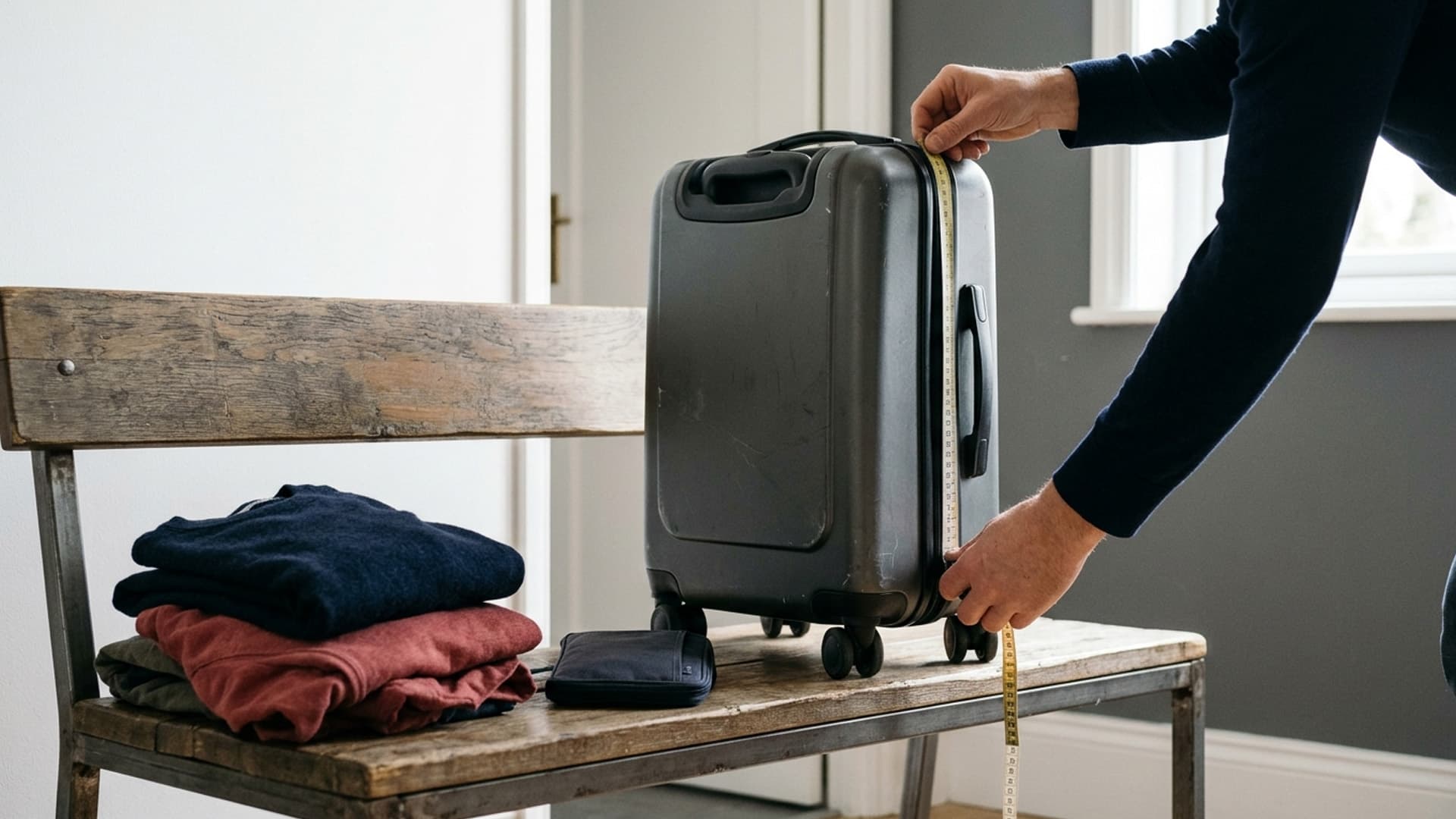
A practical cabin baggage plan starts with the allowance for your actual booking, not with how much you can fit into a suitcase. Check the permitted pieces, dimensions and weight, then decide what needs to travel with you and what can reasonably stay behind.
Packing well is not a competition to take the smallest bag. It is a way to move through the journey with equipment you can manage and items you can find. For some trips, that will mean cabin baggage only. For others, a checked bag may be the more workable choice.
Read the allowance before choosing the bag
Look at the operating airline and fare conditions for every flight in your itinerary. Check whether a smaller personal item is permitted in addition to a cabin case and what limits apply to each piece.
IATA notes that carry-on allowances vary by airline, cabin class and aircraft type. Its passenger baggage guidance is a useful general reference, but the carrier's rules for your booking remain the details to follow.
Do not rely on a retailer describing a suitcase as cabin approved. That description does not establish acceptance on every flight. A bag you used successfully before may not suit a different airline, fare or aircraft.
Measure the outside, not the empty compartment
Check the bag's full external dimensions in the condition you will actually carry it. Account for wheels, handles and any expansion section according to the airline's measuring instructions.
A soft bag can change shape after packing. Do not assume it will fit because its empty fabric folds down neatly. Pack it, close it and then assess it again.
Also weigh the packed bag with everything you intend to include. A few small accessories can add up, especially when the case itself is substantial. Leave the result comfortably within the applicable allowance rather than depending on a generous interpretation at the airport.
Build the list around the trip's activities
List the activities your luggage must support: ordinary days, a meeting, an evening event or a planned outdoor outing. Choose items that work across several situations where that is practical.
Avoid multiplying clothing for possibilities that are not part of the trip. If a particular event genuinely needs different clothes or equipment, include it deliberately rather than hiding it in a just-in-case pile.
Consider the length of the stay and any confirmed laundry arrangements. Do not assume you will have washing facilities simply because the accommodation looks suitable in photographs. The packing plan should reflect services you have actually checked.
Separate essential items from convenient extras
Begin with the documents and personal items you need to access during the journey. Then add the clothing and equipment required at the destination. Only after those fit should you consider optional comfort items.
Use an accessible pouch for small essentials, but keep valuables protected rather than loosely placed in an open outer pocket. Arrange the bag so that retrieving one item does not require unpacking everything in a queue.
Medication and medical equipment need their own checks with the relevant authorities and airline. Do not alter prescribed treatment to meet a packing target. Obtain guidance for your circumstances and carry any required documentation.
Check restricted items before they reach the bag
Battery-powered devices, spare batteries, liquids and sharp objects can have specific restrictions. Read the current airline and airport instructions for the complete route rather than assuming domestic and international screening are identical.
IATA states that power banks and spare lithium batteries belong in carry-on baggage, with spare batteries protected against short circuits. Limits and airline conditions still apply, so check your actual items rather than treating that statement as permission for every battery size.
If you are unsure about an item, resolve it before departure. The airport checkpoint is not a useful place to discover that a tool or piece of equipment requires a different arrangement.
Pack for access as well as capacity
Think about the order in which you will need things. Documents should be accessible during the airport process; an extra layer may be useful during the journey; most destination clothing can remain deeper in the case.
Avoid placing frequently needed items underneath everything else. At the same time, do not keep sensitive documents exposed simply to make access faster. A small organised compartment offers a better balance.
Packing organisers can help separate items, but they are not essential purchases. Use what you have if it keeps the bag clear and within its limits. Adding several organisers that increase weight without solving a problem defeats the purpose.
Prepare for a change in how the bag is carried
Cabin baggage can sometimes be placed in the hold when cabin storage is limited. IATA notes this possibility in its baggage guidance. Follow staff instructions and be ready to remove items that must not go into the hold.
Keep travel documents, valuables and necessary personal items readily accessible so you can separate them if instructed. Check the airline's guidance on batteries and electronic devices rather than hurriedly making decisions at the gate.
This is not a reason to pack a prohibited extra bag. It is a reason to organise the permitted luggage so that you can respond sensibly if its handling changes.
Test the bag before travel day
Pack the intended contents and walk with the bag in the way you will carry it. Try moving through a doorway, using the handle and accessing the document pouch.
Consider your own ability to handle it without assuming another passenger will lift it for you. If you need assistance, discuss arrangements with the airline rather than relying on an improvised solution.
A test also reveals whether the bag is awkward even when it meets the published limits. Compliance and convenience are different questions. A lighter arrangement may be worthwhile simply because it makes the airport process easier.
Leave a plan for the return journey
Do not use every available centimetre on the outbound trip without considering what you may bring home. Purchases, gifts or work materials can change the packing problem.
Check the return allowance separately, particularly if the operating airline or fare differs. If you expect to need additional luggage, compare the legitimate options before you travel rather than hoping everything can be squeezed into the cabin case.
Food, souvenirs and other purchases may also have import restrictions. Consult the destination authorities for the items involved. Space in your suitcase is not evidence that something can cross a border.
Decide whether cabin-only really suits the trip
If the final plan requires constant compromise, compare it with an appropriate checked-baggage option. Travelling light should help the journey, not force you to leave behind something genuinely required.
When comparing flights on the Airline Tickets booking page, look at the allowance attached to each option before selecting the fare. The site's travel journal offers broader planning ideas, but always confirm baggage rules with the operating carrier.
A useful finished plan is simple: the bag fits the rules, you can handle it, essential items are accessible and the return journey has been considered. That is a better measure of packing success than the number of things you manage to force inside.