


The Terminal as a Mirror
Airports are more than gateways to somewhere else — they are mirrors reflecting who we are when we’re between destinations. In transit, stripped of context and routine, humanity reveals its truest form. We become neither residents nor tourists, not defined by our professions or possessions, but by movement itself — by the quiet rhythm of waiting, by the silent choreography of strangers sharing the same sky-bound fate.
Every terminal hums with the same soundscape: rolling suitcases, muffled boarding calls, the low murmur of departure gates. It is a universal language that transcends culture and currency, a heartbeat of the modern world. And yet, inside that sameness, each traveller carries a story that bends time — a reunion, a goodbye, a chase, or an escape.
It’s in this suspended state that airports turn philosophical. They remind us that life itself is a kind of terminal — a place between arrival and departure, where we try to make meaning while knowing we can’t stay forever.
Between Nowhere and Everywhere
There’s an existential purity in being nowhere. In the liminal space of an airport, geography loses its grip. You are both everywhere and nowhere at once — a citizen of transit. National borders dissolve beneath your feet as you move through customs lines, security checkpoints, and duty-free corridors lined with perfume and promise.
This is the modern pilgrimage, the ritual of motion that defines our age. Unlike ancient travellers guided by stars, we follow digital constellations: flight codes glowing against departure boards, arrows leading us toward gates that open into clouds. In these brief passages, something profound stirs — a fleeting connection to the vastness of the world and to the vulnerability of being human within it.
We are reminded that no matter how advanced aviation becomes, the essence of flight is not mechanical but emotional. The act of leaving still carries the ache of separation; the act of landing still carries the relief of return. Even the most seasoned traveller feels a tremor of humility each time wheels lift from the runway — that moment when gravity, for a breath, lets go.
The Art of Waiting
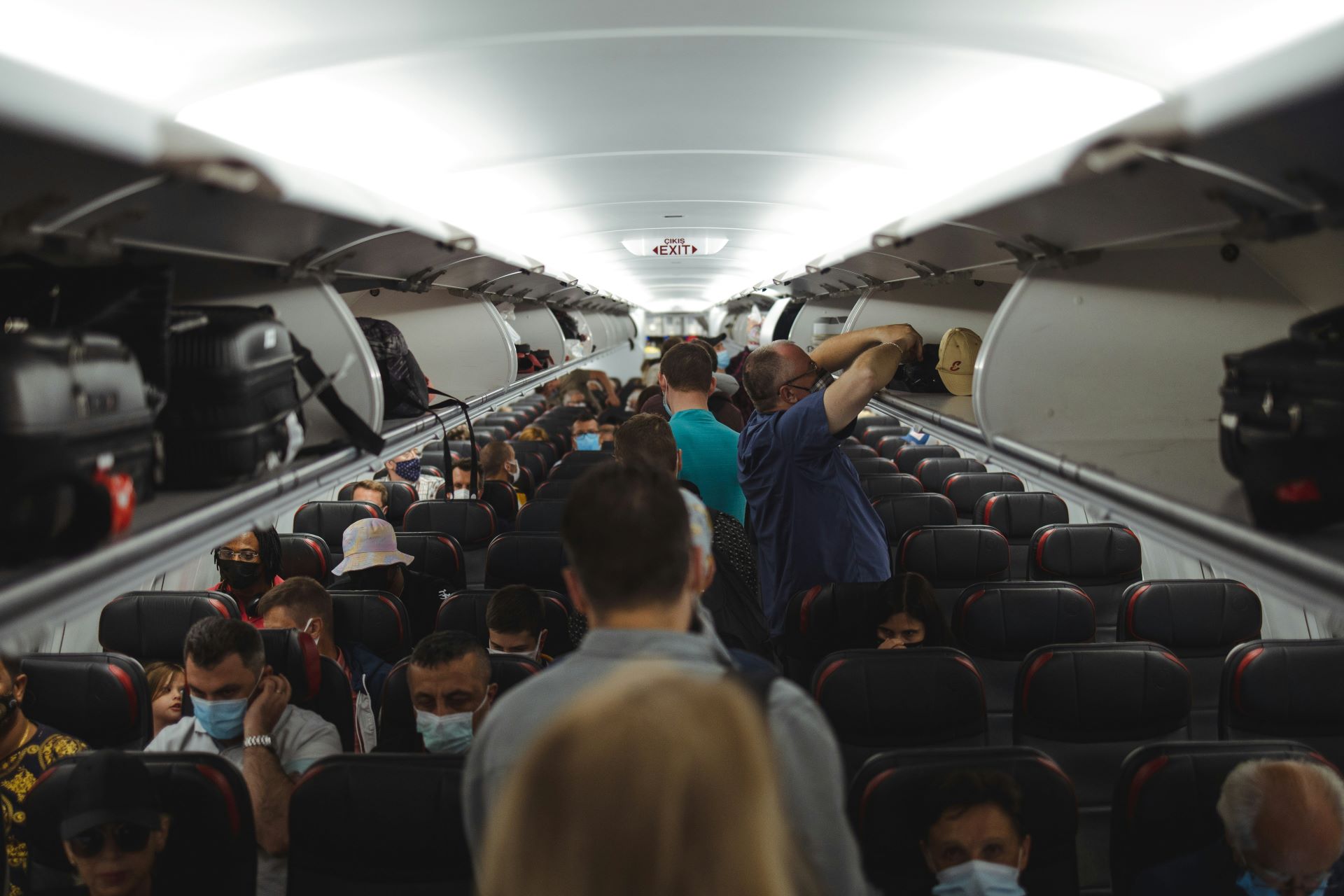
Airports teach patience in a way few other places do. There is a peculiar intimacy to waiting among strangers, each person caught in the slow machinery of time. The businessman nursing a coffee before a red-eye to Singapore, the mother soothing a child through a delayed flight to London, the backpacker half-asleep under fluorescent light — together they form a quiet congregation of anticipation.
In these waiting zones, our shared humanity surfaces. We see fatigue etched across faces, small acts of kindness exchanged between travellers, the wordless understanding that we are all simply trying to get somewhere. And in that shared state of pause, airports become unexpectedly spiritual.
Some read. Some pray. Some stare blankly at runways disappearing into rain. All, in their own way, are contemplating the same thing — the passage of time, and the fragility of plans made in a world that moves faster than our ability to process it.
There’s something poetic in that. Every flight delay, every line, every last call over the intercom is a lesson in humility. We are not as in control as we like to believe. But we are, perhaps, more connected than we realize.

Encounters at the Edge of the Sky
No other space gathers such an accidental intimacy as an airport gate. People who might never meet in any other circumstance share stories and silences while waiting for the same metal bird to take them across continents. For a few hours, lives converge and then dissolve again like contrails fading into blue.
A conversation struck with a stranger in a boarding queue can sometimes feel more genuine than those held among friends. Perhaps it’s the awareness that time is short — that when the announcement chimes and rows are called, you may never meet again. Airports make philosophers of us all, even if only for a moment.
Flight, in this way, is not just transportation but transformation. The act of moving through the sky collapses the distances between lives, turning the world into a network of fleeting encounters. Every exchange, however brief, is proof that connection doesn’t require permanence — only presence.
The Emotional Gravity of Departures
No matter how many times one flies, the act of departure always carries weight. Watching the ground shrink from the window seat, we experience a strange combination of freedom and loss. We’re leaving behind the known, chasing something ephemeral — a dream, a deal, a reunion, an escape from routine.
The airport terminal amplifies that tension. It’s where laughter collides with tears, where hugs stretch across thresholds of uncertainty. Every farewell whispered at the gate is a reminder that love and loss are twins, that one can’t exist without the other.
There’s a peculiar beauty to that vulnerability — to the act of showing emotion in a place designed for efficiency. Behind every rolling suitcase lies a story of someone who dared to move, to risk disconnection in the hope of discovery.
And perhaps that is why so many people fall in love with travel, even when it exhausts them. It’s not the destinations that seduce us, but the emotional architecture of movement itself — the reminder that we are alive, and that everything we love exists only because it can be left behind.
The Sky as a Metaphor
Air travel has become so routine that we forget its ancient miracle. To rise above the clouds is to defy every natural law that once grounded us. It is a gesture of rebellion against gravity — and against certainty. From above, the world rearranges itself into abstraction. Borders vanish. Cities blur. The things that once felt insurmountable become tiny, manageable, almost fragile.
At 38,000 feet, one can’t help but reflect on the strange contradictions of human progress. We’ve built machines that conquer distance, yet we still struggle to bridge the emotional gaps between us. We can cross oceans in hours but still feel lost in our own thoughts. The sky, then, becomes both a mirror and a teacher — showing us how small we are, and how extraordinary it is to exist at all.
In the quiet hum of the cabin, surrounded by strangers dreaming above the clouds, something resembling peace can appear. It’s not enlightenment, but acceptance — of impermanence, of connection, of the ongoing motion that defines life itself.
The Return
Eventually, every journey ends. The wheels touch down, the engines wind to silence, and the spell of flight dissolves into routine. The airport that once symbolized departure now becomes the backdrop for arrival. Loved ones wait. Phones light up. Luggage clatters back into the rhythm of earthbound life.
But something subtle lingers. The perspective of the traveller — that sense of smallness, that awareness of shared humanity — never fully fades. The world feels a little bigger, and paradoxically, a little more intimate.
This is the quiet gift of flight. It teaches us to inhabit the spaces between — between departure and arrival, between self and stranger, between certainty and surrender. It reminds us that every ending is simply another form of beginning, that life itself is a series of connecting flights we navigate with courage and curiosity.
The Final Boarding Call
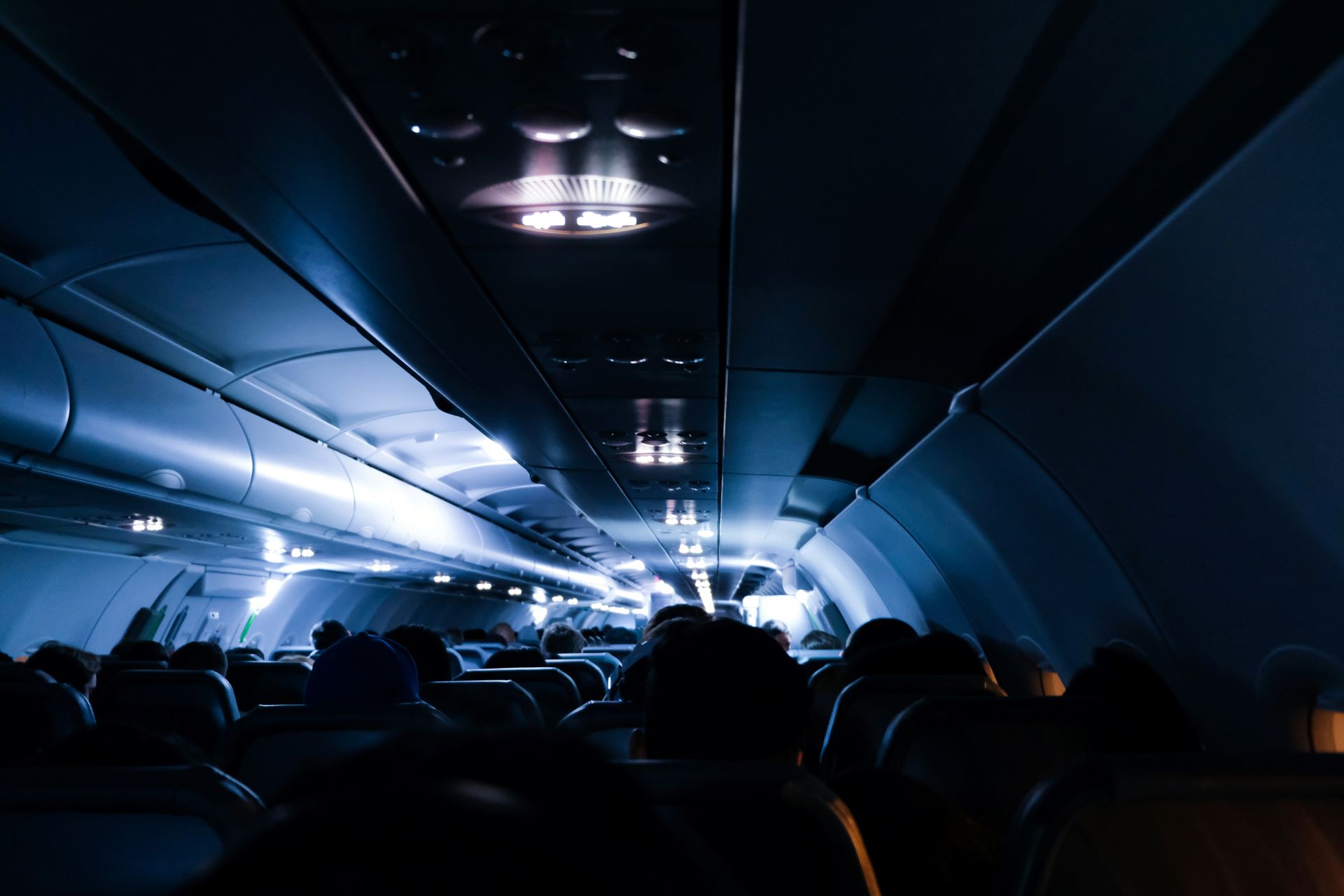
When the last flight out lifts into the night sky, it carries with it more than passengers. It carries our collective longing — to move, to belong, to find meaning in motion. In every illuminated window of that plane is a reflection of ourselves: transient, fragile, yet endlessly reaching.
Airports, in their cold efficiency and quiet poetry, show us what it means to be human. They are our temples of impermanence — where we confront both the futility and the beauty of trying to hold on.
And perhaps that’s what makes travel, and by extension life, so achingly profound. We are all, in one way or another, waiting for our final boarding call. The destination is unknown. But the journey — fleeting, luminous, imperfect — is everything.