


The Invisible Architecture Behind Every Flight
The romance of air travel often hides a sophisticated ballet of mathematics, physics, and atmospheric observation unfolding long before a passenger fastens a seatbelt. Aviation tourism depends not only on aircraft technology and airport infrastructure but also on the restless behaviour of the sky itself. Modern flight planning is deeply weather dependent, and predictive meteorology has become one of the quiet architects shaping global travel experiences.
Commercial aviation does not simply move from one city to another in straight geometric lines. Routes are continuously adjusted to respond to wind currents, temperature gradients, storm systems, and atmospheric pressure patterns that evolve like living organisms across continents. The science that enables these decisions is known as predictive meteorology, a field that blends real-time observation with computational forecasting models to anticipate how weather systems will behave hours or even days ahead.
In regions with dynamic coastal climates such as Cape Town, weather prediction is particularly crucial for tourism aviation. Sudden wind shifts near mountainous terrain can influence landing procedures, fuel consumption, and flight scheduling. Airports in cities like Johannesburg also face seasonal thunderstorm development that may disrupt take-off sequences during peak travel periods.
Organizations such as the South African Weather Service provide critical forecasting data supporting aviation operations across the country. Their atmospheric monitoring networks feed airlines, airport authorities, and air traffic controllers with continuous intelligence about wind fields, rainfall probability, and visibility risk.
At a global regulatory level, aviation weather management is guided by standards developed by the International Civil Aviation Organization, which coordinates safety protocols and meteorological reporting systems used by member states.
Tourism aviation thrives when flights are predictable, safe, and efficient. Weather forecasting ensures that holiday travellers arriving in Cape Town or departing from Johannesburg experience minimal disruption, preserving the emotional rhythm of travel.

Predictive Meteorology and the Science of Routing
Predictive meteorology is fundamentally about transforming chaos into probability. The atmosphere behaves like a vast fluid ocean layered above land and sea, constantly shifting under the influence of solar heating, planetary rotation, and moisture exchange.
Modern routing algorithms rely on numerical weather prediction models that simulate atmospheric behaviour using supercomputers. These models divide the atmosphere into three-dimensional grids and calculate how air parcels move over time. Temperature, humidity, wind velocity, and pressure are solved repeatedly across these grids, generating forecasts that can guide aviation decisions.
For tourism airlines, efficient routing directly influences operational costs and passenger comfort. Tailwinds can reduce flight duration and fuel burn, while headwinds may increase engine workload and extend travel time. By selecting altitude bands with favourable jet stream currents, pilots can ride invisible atmospheric highways that shorten transcontinental journeys.
The aviation industry increasingly uses dynamic flight planning, where routes are updated during flight rather than being fixed before departure. If a developing storm cell threatens the original trajectory, dispatch centres can calculate alternative corridors that maintain safety while minimising delay.
Weather-aware routing is particularly valuable for long-haul tourism markets connecting Africa with Europe, Asia, and the Middle East. Passengers travelling for leisure are often more sensitive to schedule disruptions than business travellers, making reliability a competitive advantage for airlines serving the tourism sector.
Visibility, Safety, and Airport Operations
Tourism aviation depends heavily on terminal and runway visibility conditions. Fog, low cloud cover, and airborne dust can interfere with landing precision, especially during early morning or evening operations.
Instrument landing systems help mitigate visibility risks, but their effectiveness is still influenced by meteorological variables. When horizontal visibility drops below operational thresholds, airports may delay arrivals or redirect flights to alternate runways.
Predictive meteorology allows airport managers to prepare for such scenarios hours in advance. Ground crews can be mobilised early, passenger communication systems can be activated, and slot allocations can be reorganised to reduce congestion.
In coastal tourism destinations, sea-air interaction frequently generates marine fog layers that move inland during temperature inversions. Cape Town’s iconic mountain landscape adds an additional aerodynamic complexity. Airflow deflection around terrain can generate turbulent pockets that affect aircraft descent stability.
Maintenance planning for airport navigation equipment also benefits from weather forecasting. Moisture accumulation, salt corrosion from ocean winds, and lightning risk management all depend on understanding upcoming atmospheric conditions.
Wind Dynamics and Aircraft Performance
Wind is one of the most influential invisible forces in aviation tourism. Crosswinds at runway level can complicate landing procedures, particularly for wide-body aircraft carrying long-distance holiday travellers.
Aircraft performance during take-off depends on air density, which is influenced by temperature and altitude. Hot weather reduces air density, requiring longer runway distances for safe lift-off. This phenomenon is especially relevant in high-altitude airports serving interior tourism markets.
Routing systems therefore integrate temperature forecasts with aircraft weight parameters to calculate optimal departure windows. Airlines operating leisure routes may adjust baggage loading strategies or passenger boarding sequences based on anticipated atmospheric conditions.
Jet stream forecasting also plays a role in long-distance tourism flights. When aircraft fly within favourable high-altitude wind streams, fuel efficiency improves significantly. Even small reductions in fuel consumption can have substantial economic effects when multiplied across an airline’s annual route network.
Thunderstorm Prediction and Seasonal Tourism Stability
Thunderstorms represent one of the most disruptive weather phenomena for aviation tourism. Rapidly developing convective systems generate turbulence, lightning risk, and intense rainfall that can compromise ground and air operations.
In regions such as southern Africa, summer months often bring afternoon thunderstorm activity driven by surface heating and moisture influx. Forecasting models attempt to identify early indicators of convective instability by analysing vertical temperature gradients and humidity distribution.
The South African aviation environment relies on continuous storm monitoring during high travel seasons. When thunderstorms are expected near major airports, airlines may implement staggered departure schedules to avoid ground congestion.
Predictive radar systems complement satellite observation by tracking storm movement in real time. Pilots receive cockpit alerts indicating turbulence zones, allowing them to adjust altitude or heading before encountering severe atmospheric disturbances.
Passenger comfort is an important component of tourism aviation. Smooth flight experiences influence destination reputation and repeat travel behaviour. By reducing unexpected turbulence encounters, predictive meteorology indirectly supports tourism marketing outcomes.
Climate Variability and Long-Term Tourism Planning
Beyond short-term forecasting, aviation tourism must also adapt to long-term climate variability patterns. Shifting rainfall seasons, ocean temperature anomalies, and atmospheric circulation changes can influence route demand and airport infrastructure resilience.
Tourism operators use climate projection models when designing seasonal flight schedules. Beach tourism destinations may experience peak demand during dry periods, while inland cultural tourism may attract travellers during cooler weather cycles.
Airport infrastructure planners also use historical weather datasets when expanding terminals, constructing drainage systems, or reinforcing structural elements against wind stress and precipitation loading.
Sustainable aviation tourism increasingly intersects with climate science. Airlines are exploring emission reduction strategies because atmospheric greenhouse gas accumulation can indirectly influence future weather stability.
Satellite Technology and Real-Time Monitoring
Modern weather forecasting is deeply intertwined with space observation technology. Earth-orbiting satellites capture cloud formation patterns, sea surface temperatures, and atmospheric moisture distribution across continents.
Data streams from satellite networks are processed through machine learning algorithms that identify emerging weather hazards. Instead of relying solely on human interpretation, aviation meteorology now combines statistical modelling with automated anomaly detection.
Pilots and dispatch centres receive integrated dashboards showing weather evolution projections along planned flight corridors. These systems function like temporal navigation maps, allowing aircraft to avoid unstable atmospheric territories.
Global tourism airlines benefit enormously from this technological integration. When holiday travellers fly across multiple climate zones, continuous monitoring ensures that route safety remains consistent throughout the journey.
Fuel Efficiency, Sustainability, and Economic Tourism Value
Weather forecasting contributes directly to aviation sustainability. Efficient routing reduces fuel consumption, which lowers operational costs and carbon emissions.
Tourism destinations that prioritise sustainable aviation access are becoming more attractive to environmentally conscious travellers. Airlines operating within these markets often market themselves as low-impact mobility providers.
Wind optimisation, altitude selection, and departure timing adjustments collectively contribute to greener flight operations. Even marginal improvements in forecast accuracy can produce significant environmental and financial dividends across global tourism networks.

Human Decision-Making and Automated Intelligence
Despite advances in artificial intelligence, human expertise remains central to aviation meteorology. Automated systems generate predictions, but experienced meteorologists and flight controllers interpret contextual uncertainties.
Weather models sometimes disagree because atmospheric behaviour is inherently nonlinear. Small measurement errors can propagate into larger forecast deviations. Skilled operators evaluate multiple model outputs before issuing operational instructions.
The future of aviation tourism will likely involve hybrid intelligence systems combining machine speed with human situational awareness.
Tourism Experience and Passenger Psychology
Travel is not purely mechanical. Tourism aviation also carries emotional expectations. Passengers associate smooth departures and timely arrivals with destination quality.
Weather disruptions can influence traveller satisfaction, even when safety is never compromised. Predictive meteorology reduces uncertainty by allowing airlines to communicate expected conditions early.
Digital booking platforms increasingly display weather probability indicators alongside flight schedules. This transparency allows tourists to plan activities at their destinations with greater confidence.
The Future Sky of Tourism Mobility
The next frontier of aviation weather technology may involve hyper-localised atmospheric modelling. Ultra-high resolution forecasting could allow airlines to predict turbulence at minute spatial scales, transforming passenger comfort management.
Autonomous aircraft systems are also expected to rely heavily on meteorological intelligence. As aviation engineering evolves, the boundary between navigation technology and atmospheric science will continue to blur.
Urban tourism hubs such as Johannesburg and coastal gateways like Cape Town will benefit from this convergence of weather science and mobility innovation.
The sky is no longer an unpredictable wilderness but a carefully mapped dynamic environment. Predictive meteorology has transformed aviation tourism from a risk-managed enterprise into a precision-guided mobility ecosystem.
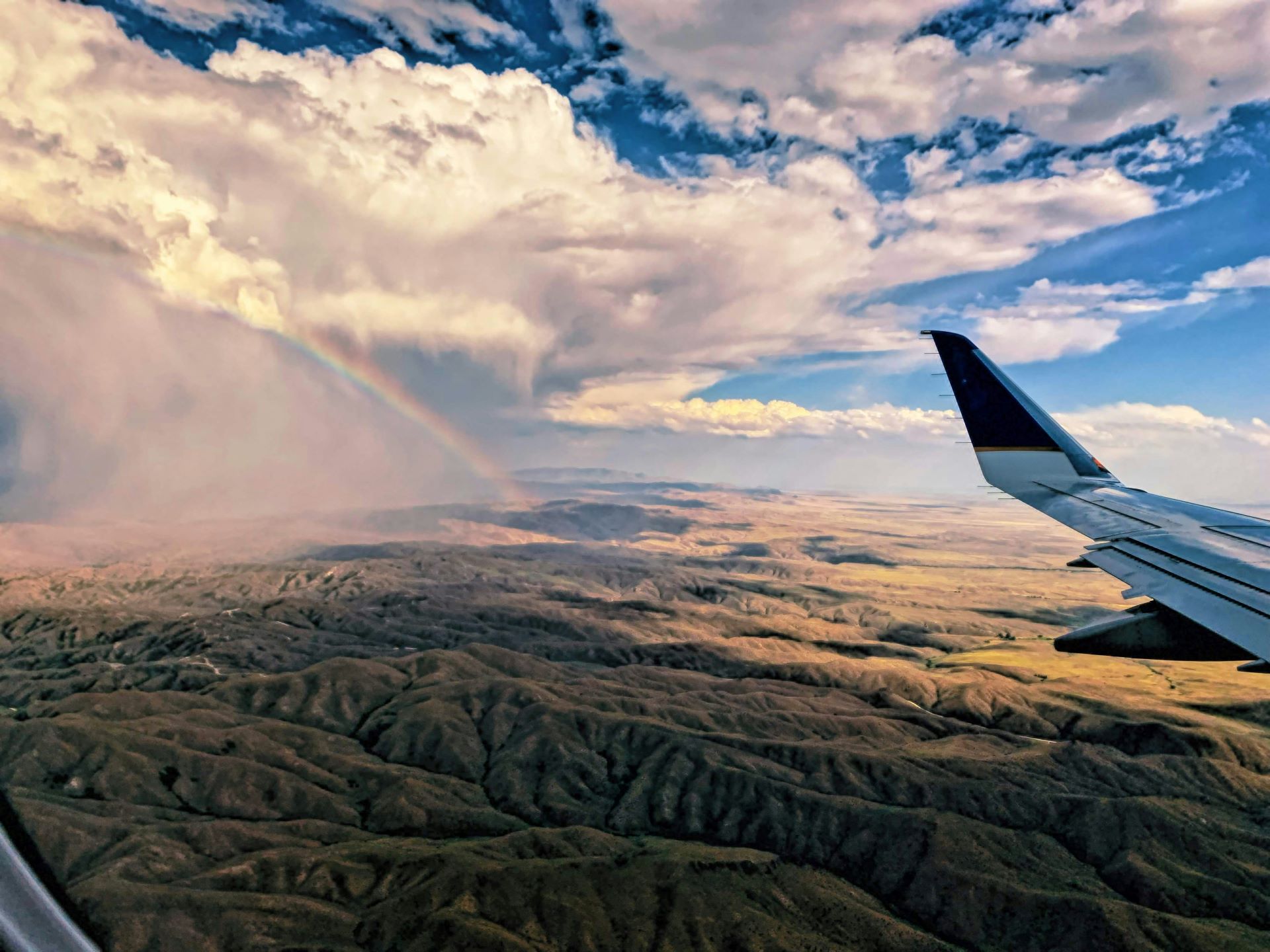
Weather forecasting is far more than a supporting service in aviation tourism. It is a strategic foundation that shapes routing efficiency, operational safety, environmental sustainability, and traveller experience.
Through the collaboration of meteorological agencies, aviation regulators, and technological innovators, flight planning has evolved into a science of atmospheric anticipation.
As predictive models grow more accurate and computational power expands, aviation tourism will continue soaring on currents of knowledge carried invisibly through the air above us.