


There’s something inherently primal about the sky—an expanse that has lured explorers, dreamers, and thrill-seekers alike since the beginning of time. Today, with modern aviation and adventure sports at our fingertips, the sky has become not just a frontier to cross, but a destination in itself. Enter the exhilarating world of aerial tourism: a sector that is less about luxury jetliners and more about heart-pounding adrenaline, immersive landscapes, and unforgettable experiences. From the free-falling rush of skydiving to the silent glide of paragliding and the curious hum of microlight aircraft cutting through clouds, these high-flying adventures are captivating a new generation of travellers looking to break free from the mundane and soar into the extraordinary.
This is a story about those who choose to chase horizons, about places that come alive from above, and about the visceral joy of trading the ground for the endless blue.
A New Frontier in Tourism
Tourism is evolving. In an era where travellers increasingly seek authenticity, uniqueness, and sensory immersion, the traditional trappings of sightseeing are being redefined. Modern explorers are no longer content to stand at a viewpoint and snap a photo. They want to feel the altitude in their lungs, the wind against their cheeks, and the velocity of motion beneath them. They want to engage with their environment from the rarest vantage points. And nothing quite delivers that sensation like aerial adventure sports.
The appeal of sky tourism is both psychological and physical. There is a deep-seated allure in conquering gravity, however briefly, and doing so in a way that connects us to nature’s raw beauty. A mountain range is impressive when seen from a hiking trail, but utterly awe-inspiring when observed from a parachute or a paraglider. A coastline reveals its full splendour when viewed not from the sand, but from hundreds of metres above, where the curve of the earth begins to whisper into view.
Adventure tourism operators around the globe have caught on. Once the preserve of hardcore thrill-seekers, aerial sports have now been adapted for mainstream consumption. Tandem experiences, short introductory flights, and strict safety protocols have opened the skies to the curious and the cautious alike. It’s no longer just about risk—it's about perspective.
The Skydiving Surge
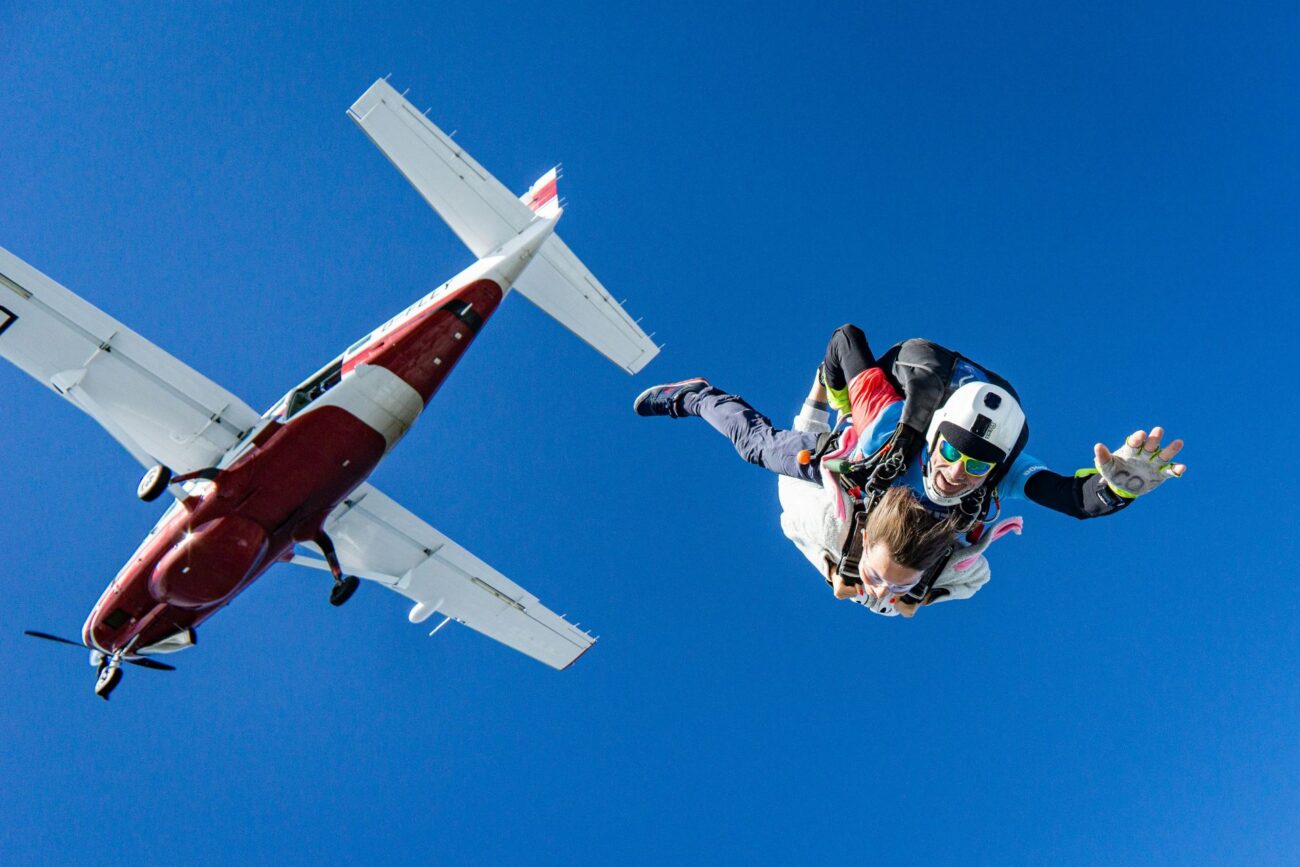
Skydiving remains the crown jewel of aerial adrenaline. There is no thrill quite like it. The aircraft door slides open, the air rushes in, and with one motion, you are falling—fast, free, and utterly unmoored from the world below. In those intense, electrifying seconds of freefall, time seems suspended. Every instinct comes alive. And then, with the tug of a cord, the canopy blooms above you, the world slows down, and the descent becomes serene. The quiet is jarring after the rush. The earth draws closer. And when your feet finally touch down, you are not the same as you were before.
What was once a niche activity for military personnel or extreme adventurers has become a bucket-list staple. Across Europe, Asia, Oceania, Africa, and the Americas, skydiving centres now cater to everyone from solo backpackers to corporate groups. Tandem skydives, where a novice is strapped to a certified instructor, allow even first-timers to experience the thrill without needing months of training.
Locations play a critical role. Queenstown in New Zealand offers spectacular alpine views. The deserts of Dubai, the coastlines of Australia, the Swiss Alps, and the vast savannahs of South Africa each provide dramatically different visual backdrops—but the thrill remains the same. Skydiving has become an aerial pilgrimage of sorts, a ritual of altitude that transcends geography.
Safety, of course, is paramount. Today’s drop zones adhere to stringent international standards. Equipment is state-of-the-art, with automatic activation devices, dual chutes, and rigorous instructor training programmes. Skydiving may be high-octane, but it is far from reckless. The emphasis is not on danger, but on control—calculated risk wrapped in robust preparation. And for many, that delicate balance is part of the appeal.
Paragliding: Serenity in Flight
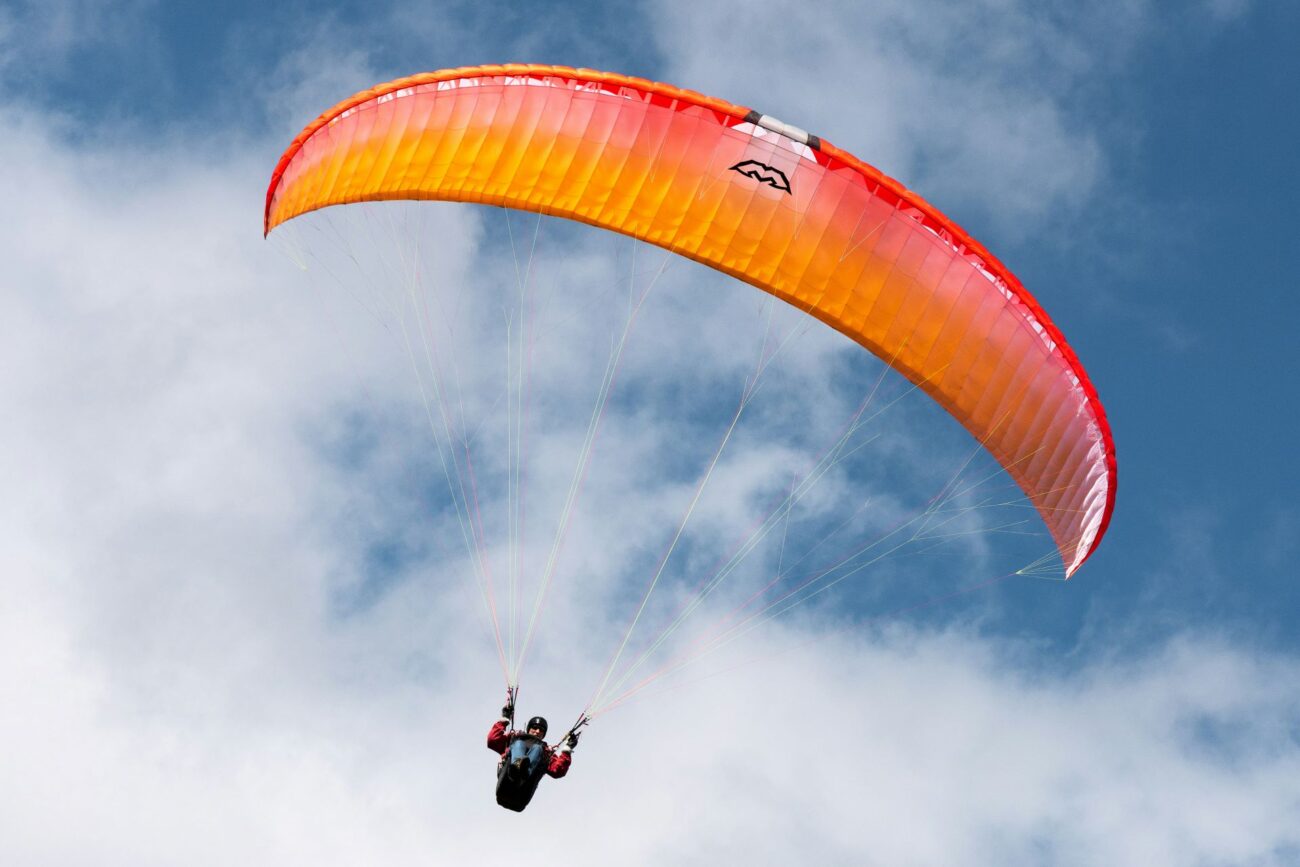
If skydiving is the high-octane action movie of aerial tourism, then paragliding is its lyrical, slow-burn drama. It’s the art of soaring rather than falling, of floating through air currents like a leaf carried on the wind. No engines. No thrust. Just a wing, a harness, and the grace of thermals rising off the earth. It is, in many ways, the most natural way to fly.
Paragliding offers something rare in the world of adventure: peace. Suspended beneath a crescent-shaped wing, pilots and passengers experience the landscape in silence. Mountain slopes, lakes, valleys, and coastline unfold beneath you like a living map. The only sound is the occasional shift of the fabric overhead and the distant rush of wind in your ears.
The accessibility of paragliding has contributed to its popularity. Tandem flights allow novices to take to the skies with a certified pilot, often after a brief briefing on take-off and landing techniques. Launch sites are typically located at elevated areas—a hill, a mountain ridge, or even purpose-built platforms—with recovery vehicles waiting below to collect both flyer and equipment.
In destinations such as the French Alps, the Dolomites, the Cape Winelands, the Himalayas, and Oludeniz in Turkey, paragliding has become as integral to the tourist experience as local cuisine or cultural tours. These sites boast ideal wind conditions, stunning terrain, and well-established paragliding schools, some of which also offer courses for travellers wanting to earn their wings and learn to fly solo.
It’s also a deeply mindful pursuit. Pilots read the wind, study the terrain, and tune in to subtle changes in pressure and flow. It requires a connection with nature that is both intellectual and emotional. There’s a meditative rhythm to the way paragliders move across the sky, drawing arcs and lines over the horizon like brushstrokes on a canvas.
Microlight Adventures: Aviation, Simplified
Microlight aviation straddles a unique space in aerial tourism. These compact, lightweight aircraft—sometimes called ultralights—offer the thrill of flight with a fraction of the complexity of conventional planes. They are the go-karts of the sky: small, nimble, open-cockpit machines that deliver big adventure in a minimalist package.
For travellers, microlights offer a rare opportunity: to see the world from the pilot’s seat. With fewer barriers to entry than traditional aviation, microlight flights often allow for dual-control experiences, where guests can co-pilot under supervision or simply enjoy the ride. The sensation of flight is immediate and visceral. Unlike pressurised cabins, here you feel every lift, every bank, every thermal updraft. The views are panoramic, the sensation raw and real.
The charm of microlights lies in their intimacy. You are not separated from the elements by glass and fuselage. The wind is part of the journey. You feel it in your hair, across your skin. The engine hums behind you, responsive to the lightest of touches. It is flight stripped down to its essence.
Microlight routes are often tailored to highlight natural landmarks. In Southern Africa, they skim over game reserves and river valleys. In Southeast Asia, they trace the contours of rice paddies and limestone karsts. In Europe, they follow coastlines and castle-studded hills. Because they fly at relatively low altitudes and speeds, microlights provide a detailed, immersive perspective that’s often lost in traditional aviation.
They’re also surprisingly green. Many modern microlight engines are fuel-efficient and low-emission, and electric models are beginning to emerge. In a tourism industry increasingly conscious of sustainability, this positions microlights as a lighter, quieter, and more eco-friendly way to explore the skies.
Psychological Altitude
Beneath the machinery and gear, there’s something deeply personal about these experiences. They awaken a dormant part of us—the instinct to rise, to escape, to view our world from new angles. In the split second after jumping from a plane or the quiet curve of a paraglider catching wind, we are reminded of our place in the universe. It’s not about escaping reality, but enhancing it.
Aerial adventure also reshapes our sense of scale. Mountains become molehills, rivers thread like veins across the land, and cities sprawl like patchwork below. Problems and preoccupations shrink. The sky has a way of restoring perspective—not just literally, but emotionally.
That catharsis is part of what makes flight such a powerful draw for modern tourists. They aren’t just looking for photo opportunities; they’re seeking transformation. The adrenaline, the fear, the freedom—all of it collides into an experience that’s as much about self-discovery as it is about travel.
The Business of Airborne Escapism
The rise of aerial tourism is also a tale of smart entrepreneurship. Operators across the globe are tailoring their offerings to meet growing demand, from luxury packages for high-net-worth individuals to budget-friendly experiences for backpackers and solo travellers. Integrated tourism products—like combo packages that pair skydives with vineyard tours or paragliding with cultural immersions—are helping destinations diversify and appeal to broader markets.
Insurance, regulation, and certification remain vital pillars. As the industry grows, so does the responsibility to ensure safety, sustainability, and inclusivity. Organisations like the United States Parachute Association (USPA), the British Hang Gliding and Paragliding Association (BHPA), and various civil aviation authorities play a crucial role in setting and maintaining standards.
But beyond the logistics, the future of aerial tourism will hinge on storytelling. Travellers want more than just a thrill—they want to feel part of something larger. Smart operators are investing in content, community, and cause. From conservation-linked flights that raise awareness about deforestation to female-led flying clubs breaking gender barriers, the narratives around flight are becoming as compelling as the experiences themselves.
Final Descent
Aerial adventure is no longer a fringe curiosity. It is a movement. One fuelled by a hunger for meaning, for momentum, for moments that lift us beyond ourselves. Whether it’s the defiant plunge of a skydive, the poetic dance of a paraglider, or the mechanical grace of a microlight, these experiences remind us that flight is not just physics—it’s feeling.
As more travellers look upwards, drawn by the promise of altitude and the pull of the unknown, the sky is quickly becoming the most coveted destination of all. And in a world that often feels ground-bound by routine, regulation, and repetition, perhaps it’s time we let go, lean forward—and fly.