
Travel News


Redefining the Modern Jet Set In the golden age of aviation, luxury meant caviar in first class and a champagne glass balanced at 35,000 feet. The...
In the golden age of aviation, luxury meant caviar in first class and a champagne glass balanced at 35,000 feet. The notion of exclusivity was bound to the front of the cabin, where privacy, personalised service, and space were the ultimate indulgences. But as the aviation industry evolves, so too does the definition of what it means to fly well. The rise of private and semi-private air travel has disrupted the very notion of luxury in the skies — not as an unattainable extravagance, but as a refined, flexible, and increasingly accessible travel experience.
Across the world, a new category of traveller has emerged: one that values time over ostentation, comfort over spectacle, and seamlessness over spectacle. The advent of semi-private aviation — from shared charter services to membership-based flight models — is democratising exclusivity. It’s allowing discerning travellers to experience the convenience and privacy of private aviation without the prohibitive price tag of full charter. The result is a new frontier for tourism: high-end, high-frequency, and highly personalised.

The shift towards semi-private air travel reflects a broader change in consumer psychology. Post-pandemic travel has become more intentional, more experiential, and more concerned with the journey itself. For many, the idea of battling crowded terminals, long queues, and flight delays has become incompatible with modern luxury. Semi-private aviation fills that gap — offering the streamlined experience of private flight with the accessibility of a commercial ticket.
In the United States, brands like JSX and Aero have been at the forefront of this transformation, operating scheduled flights between major cities and leisure destinations but from private terminals. Passengers arrive twenty minutes before departure, bypass security queues, and board sleek jets with no middle seats. In Europe, companies like Surf Air and GlobeAir are reimagining the short-haul experience, catering to business travellers, leisure seekers, and second-home owners alike. The model is not about extravagance, but efficiency wrapped in elegance — a kind of “smart luxury” that appeals to a generation more attuned to value and experience than status.
This accessibility is changing perceptions of private aviation. Once seen as the domain of celebrities and CEOs, private air travel is now being marketed as an elevated yet practical option for time-sensitive travellers. It’s not about the ego of the jet set, but the logic of mobility. The democratisation of exclusivity has blurred the boundaries between private and commercial — and in doing so, has created an entirely new market segment in tourism.
One of the most interesting shifts in the private aviation landscape is the move from traditional chartering towards community-driven flight models. Jet-sharing platforms and membership clubs have replaced one-off bookings with subscription-style access. This mirrors the transformation seen in other luxury sectors — from car-sharing programs to fractional yacht ownership — where access has become the new form of ownership.
Companies like Wheels Up, VistaJet, and FlyBlade have pioneered this approach. They allow members to book individual seats on private jets or helicopters, often at a fraction of the cost of a full charter. The result is a shared experience that maintains the intimacy and service of private flight, but with a social dimension that appeals to a new generation of affluent travellers.
This model has also created new opportunities for boutique tourism. Resorts in destinations like the Maldives, Sardinia, and the Caribbean are partnering with private aviation brands to offer curated flight-and-stay packages. Guests are flown directly to private islands, luxury lodges, or even yacht moorings — seamlessly connecting the air and land elements of their journey. For the traveller, this represents more than convenience; it’s a continuation of the experience from take-off to touchdown.
Tourism has long been influenced by accessibility. Low-cost carriers opened up international travel to the masses, while first-class suites refined the meaning of high-end aviation. Now, semi-private air travel is bridging the gap between the two. It appeals to a new type of traveller: the “conscious luxury” tourist. These individuals seek meaningful, flexible, and sustainable travel experiences that align with their lifestyles.
The semi-private model’s appeal lies in its hybrid nature. It maintains the efficiency and comfort of private flight but shares costs across multiple passengers, making routes viable that might otherwise be uneconomical. This enables operators to serve secondary cities and emerging destinations — connecting, for example, Johannesburg to the Cape Winelands, or Nice to Corsica — without the need for major airport infrastructure. In doing so, semi-private carriers are not just offering convenience but stimulating regional tourism.
In South Africa, this model is slowly gaining traction. Boutique aviation companies are offering charter services that link high-end safari lodges, vineyards, and coastal resorts directly. Rather than routing through Johannesburg or Cape Town, travellers can fly directly from the Kruger to the Garden Route, or from Sabi Sands to the Winelands. This not only saves time but enhances the sense of discovery — turning transit into part of the experience.
For all its glamour, private aviation faces a pressing challenge: sustainability. With growing scrutiny over emissions and environmental impact, the industry is under pressure to justify its carbon footprint. Semi-private flight models offer one possible solution. By optimising load factors and utilising smaller, more efficient aircraft, they reduce the per-passenger environmental impact compared to traditional charters.
Furthermore, many operators are investing heavily in sustainable aviation fuel (SAF) and exploring hybrid or electric propulsion technologies. Surf Air, for example, has been developing electric flight solutions for its European operations, aiming to create a zero-emission alternative for regional routes. Similarly, major charter groups are integrating carbon offsetting into their pricing, giving passengers the option to balance their footprint with verified environmental projects.
The rise of flexible, sustainable aviation aligns neatly with broader tourism trends. Travellers are increasingly conscious of the ethical and environmental implications of their choices. As such, brands that blend luxury with responsibility — offering both comfort and conscience — are finding a receptive audience. The semi-private model, by design, fits this narrative: efficient, lean, and increasingly green.

Behind the smooth façade of semi-private aviation lies a web of advanced technology. From AI-driven scheduling systems to digital membership platforms, technology is the silent enabler that makes flexible flying possible. Unlike traditional airlines with rigid schedules and high overheads, semi-private operators use dynamic pricing and route optimisation to match capacity with demand.
Mobile apps allow passengers to book seats, check-in, and access private terminals with the same ease as ordering a ride-hailing service. Jet-sharing platforms even use predictive analytics to determine which routes will attract interest, often launching pop-up flights based on user demand. The emphasis is on frictionless mobility — where luxury is not defined by crystal glassware, but by the absence of stress.
For tourism, this seamlessness is transformative. Imagine booking a bespoke safari itinerary that automatically includes a private transfer from Cape Town to a remote game reserve, complete with real-time flight tracking and on-demand ground transfers. The traveller’s journey becomes orchestrated — not through endless confirmations and logistics, but through intuitive, data-driven design.
The COVID-19 pandemic fundamentally reshaped perceptions of personal space and safety in travel. In its wake, private and semi-private aviation experienced a surge in demand as travellers sought controlled, contactless environments. What began as a necessity has since evolved into a preference — and, for many, a permanent shift.
Privacy has become the new currency of luxury. In the same way travellers once sought opulence in design, they now seek isolation in experience. Semi-private flights offer precisely that balance — limited passenger numbers, private terminals, and personalised service without complete seclusion. This approach has resonated deeply with both leisure and business travellers, many of whom discovered the benefits of flexible flying during lockdowns and have since refused to return to traditional airports.
As borders reopened, semi-private operators became the bridge between commercial and private travel, offering controlled environments without the prohibitive costs. The model continues to thrive in this post-pandemic landscape, where convenience, safety, and autonomy define modern travel priorities.
Beyond convenience, semi-private aviation has far-reaching implications for global tourism economies. By opening up access to lesser-known destinations, it diversifies travel flows and supports local economies. Small airports, once underutilised, are being revitalised by new semi-private routes. Boutique hotels and lodges benefit from improved accessibility, while travellers discover hidden corners of the world once unreachable without complex logistics.
In South Africa, regional air connectivity is becoming a cornerstone of sustainable tourism growth. Charter companies are collaborating with luxury lodges, coastal retreats, and even wine estates to create bespoke air itineraries. This decentralisation of tourism benefits local communities while reducing congestion at major airports. For an economy so deeply tied to its natural landscapes and hospitality, the impact of semi-private connectivity could be profound.
One of the most compelling aspects of this evolution is the reimagining of the flight experience itself. In the semi-private space, travel is not merely a means to an end — it is an integral part of the journey. Operators are crafting experiences that rival luxury hotels, with curated interiors, artisanal catering, and even in-flight wellness offerings.
Some brands have turned their jets into airborne lounges, complete with ambient lighting, local cuisine, and regional design influences. Others have partnered with high-end lifestyle brands — think champagne houses, fashion designers, or boutique coffee roasters — to elevate the onboard experience. This experiential approach aligns with the growing demand for authenticity and storytelling in tourism. Each flight becomes an extension of the destination’s culture, an intimate prelude to the experiences awaiting on the ground.
The trajectory of semi-private aviation points to a future where flexibility and personalisation dominate air travel. As technology advances and competition grows, prices are likely to become even more accessible, expanding the market beyond traditional luxury segments. Emerging markets in Africa, the Middle East, and Southeast Asia are already exploring similar models, adapting them to local contexts and tourism infrastructure.
Electric vertical take-off and landing (eVTOL) aircraft — often referred to as “air taxis” — could further revolutionise this space. They promise to make short-haul air mobility as common as ride-sharing, connecting airports, city centres, and remote destinations in minutes. For tourism, this could mean unprecedented access to wilderness reserves, coastal enclaves, and island escapes without the environmental toll or logistical complexity.
Ultimately, the rise of private and semi-private air travel is not just about luxury — it’s about liberation. It represents freedom from rigid schedules, crowded terminals, and conventional definitions of exclusivity. It speaks to a new era of travel that values experience over excess, time over opulence, and personalisation over prestige.
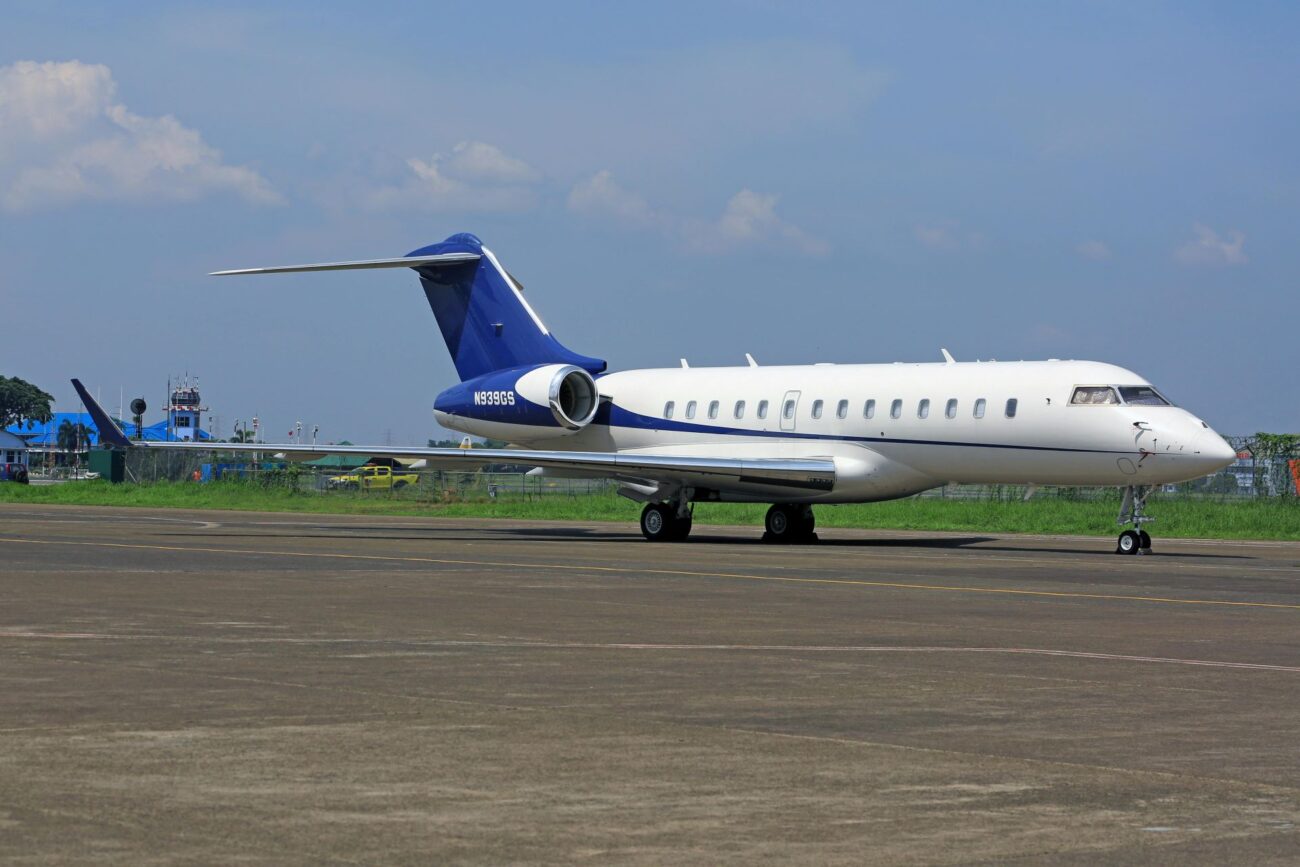
As the boundaries between private and public aviation continue to blur, the future of air travel looks poised to redefine what luxury means. Semi-private models are not replacing the glamour of private jets or the scale of commercial carriers — they’re creating a third space, one that embodies the sophistication of the former and the accessibility of the latter.
In this new world, the sky is no longer reserved for the elite few; it’s a canvas of opportunity for those who value comfort, connection, and control. Whether for the executive hopping between meetings or the couple flying directly to a secluded lodge, semi-private aviation is opening the world in ways that are both practical and poetic.
The jet age may have begun with dreams of glamour and power, but its new chapter is being written in the language of flexibility, sustainability, and experience. Chartering the skies has never been more personal — or more promising — for the future of tourism.
Elisha Roodt
Specializing in the intersection of high-fidelity capture and spatial computing, providing expert analysis on the hardware and software ecosystems defining the metaverse.


